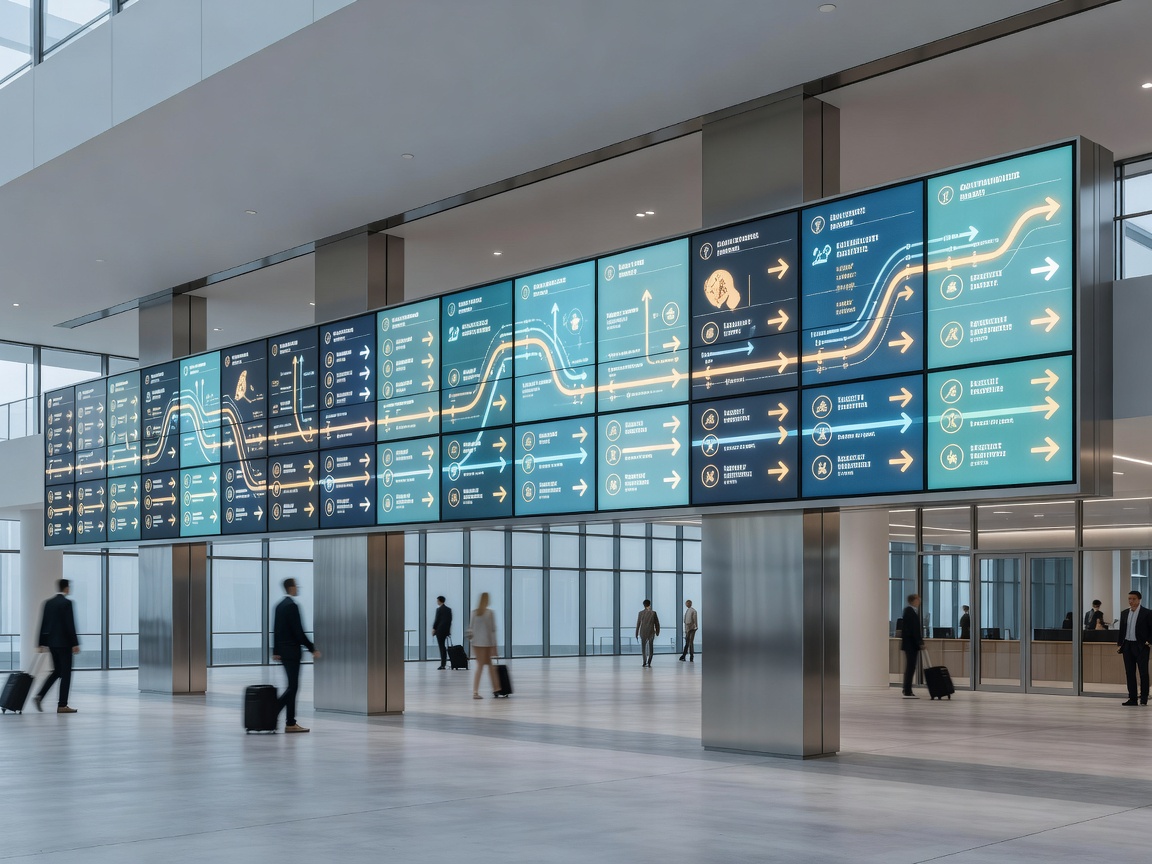
The information architecture comes first
A connected destination system may include screens, kiosks, websites, maps and operational messages. A central content service can help teams update several channels, but it cannot repair unclear names, conflicting opening times or missing ownership. Before choosing tools, define the information model: places, routes, services, dates, languages and responsibilities.
Consistency is a visitor benefit. If a venue has different names on a map and a screen, confidence drops. Create a shared vocabulary and decide which source is authoritative for each content type.
Remote updates and scheduling
Remote updates let an authorised team change distributed displays without visiting every site. Scheduling can support seasons, event periods and time-sensitive arrival messages. These features need review steps, permissions and expiry dates. A fast publishing button without governance can spread a mistake just as quickly as it spreads a correction.
Use status monitoring to identify unavailable displays, stale content or network problems. Monitoring is not the same as solving; someone still needs a response procedure, escalation path and record of what happened.
Real-time information, carefully defined
Real-time information can refer to changing conditions, arrival updates, availability or operational notices. Its usefulness depends on the quality and timing of the source. Label information clearly when it is estimated, scheduled or last updated. Avoid implying live accuracy where the underlying feed is delayed or incomplete.
Accessibility and governance
Connected systems should preserve accessible content across every channel. Alt text, captions, readable contrast, language options, keyboard access and non-digital alternatives must be part of the content workflow, not a late technical patch.
Governance defines who writes, checks, approves and retires information. It also defines how urgent messages are handled without allowing emergency content to permanently displace essential orientation. Review permissions regularly and keep an audit trail where appropriate.
Good for
Multi-site destinations, distributed visitor services, seasonal programmes and teams managing information across several public touchpoints.
What to know
- Define sources of truth before connecting channels.
- Give every content type an owner and expiry rule.
- Plan for offline display behaviour.
- Measure clarity through questions and observed journeys, not technology count.
Related guides
Digital signage → Kiosks → Planning →